Choose a place you can visit well
A small settlement can seem close on a map while sitting at the end of a slow, narrow or weather-sensitive road. Before adding it to an itinerary, check the approach, parking arrangements and the likely availability of food or toilets. Decide what you actually want to do there. A harbour walk and a locally run café may be enough; there is no need to invent a full day of attractions.
Remote does not mean undiscovered, and picturesque does not mean public. Residents may be managing deliveries, fishing work, family routines and limited infrastructure alongside visitors. Arriving outside a busy period can help, but it does not remove the need to follow signs or ask where parking is appropriate. If a village is already congested, move on rather than adding another vehicle to the problem.
Nyksund: a harbour at the end of the approach
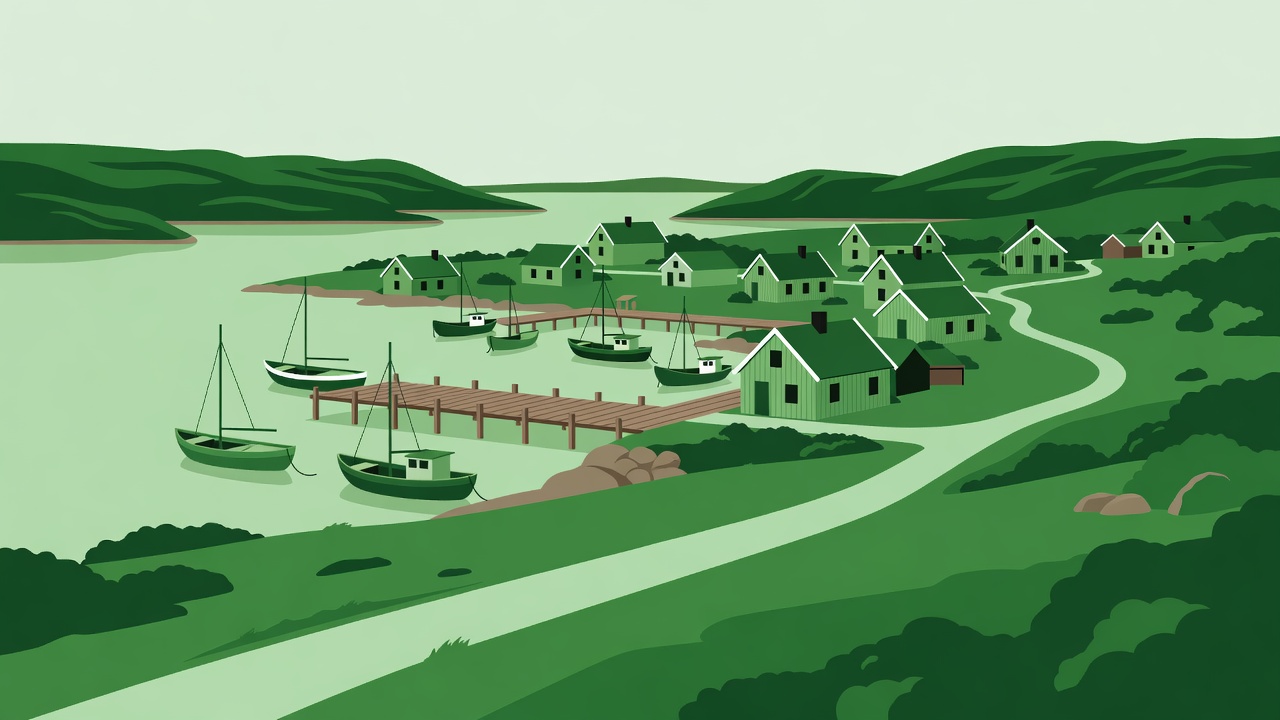
Nyksund, in Norway’s Vesterålen region, offers a compact harbour setting with a history shaped by fishing and later changes in the settlement’s fortunes. Its appeal is not that it offers endless things to do. It is the scale of the waterfront, the relationship between buildings and sea, and the sense of arriving somewhere with a distinct story.
Plan the approach from the wider Øksnes area with current road conditions in mind. A narrow final section should not be treated as a place for impromptu photo stops. Use designated parking and explore on foot where access is allowed. If you want a meal or overnight stay, confirm opening and availability in advance rather than expecting a full range of services on arrival.
Nearby walking routes can involve exposed terrain and changing weather. A visit to the harbour does not commit you to a mountain outing. Separate those decisions: clothing, daylight, trail information and experience should determine whether a walk is appropriate, not the fact that you have already driven there.
Gjógv: allow time for the road as well as the village
Gjógv, on Eysturoy in the Faroe Islands, is associated with its narrow natural harbour and closely gathered buildings. The journey there is part of its character, but mountain roads can be demanding in low cloud, wind or winter conditions. Check local advice and do not assume that short distances mean easy driving.
Once you arrive, follow local parking and path signs. Working areas, private homes and the harbour edge require care. A dramatic coastal setting does not make waves or steep edges safe. Enjoy the village from established routes and avoid stepping into gardens to improve a camera angle.
The Faroe Islands are part of the wider Nordic region rather than Scandinavia in the narrower geographic sense. Include them as a considered separate journey or a properly planned extension—not as an effortless add-on to a mainland drive. Consult Visit Faroe Islands for local visitor guidance and check any access requirements for walks.
Inari: begin with cultural context
Inari, in Finnish Lapland, is a useful base for understanding a landscape that is both beautiful and culturally significant. Lake Inari is a defining presence, but the area is not simply a scenic emptiness. Sámi culture, language and contemporary life belong at the centre of a thoughtful visit.
The Siida museum offers a meaningful starting point. Check its current opening arrangements and allow proper time rather than squeezing it between long drives. Prefer interpretation produced by local institutions and Sámi voices. Avoid treating clothing, livelihoods or cultural practices as props for a holiday photograph.
Choose lakeside walks and excursions according to current access and conditions. A calm-looking lake can still be cold and exposed; winter ice is not automatically safe because someone else appears to be using it. Where an activity requires local knowledge or specialist equipment, use a suitably qualified local provider instead of improvising.
Seyðisfjörður: let the mountain approach set the schedule
Seyðisfjörður in east Iceland brings together a fjord setting, a working town and a mountain-road approach from Egilsstaðir. Its buildings and cultural life make it worth more than a brief turnaround at the waterfront. It can work as an overnight base when services and accommodation fit the wider route.
The approach over Fjarðarheiði requires particular attention to weather and road status. Conditions can differ markedly between the coast and the pass. Check Iceland’s road information before driving and leave room to delay. Do not build an itinerary that depends on the road being comfortable merely because it is a main access route.
As elsewhere, keep working harbour areas clear and use established public spaces. If an attraction or business is closed, that is a reason to adjust your visit, not to enter private property in search of another view.